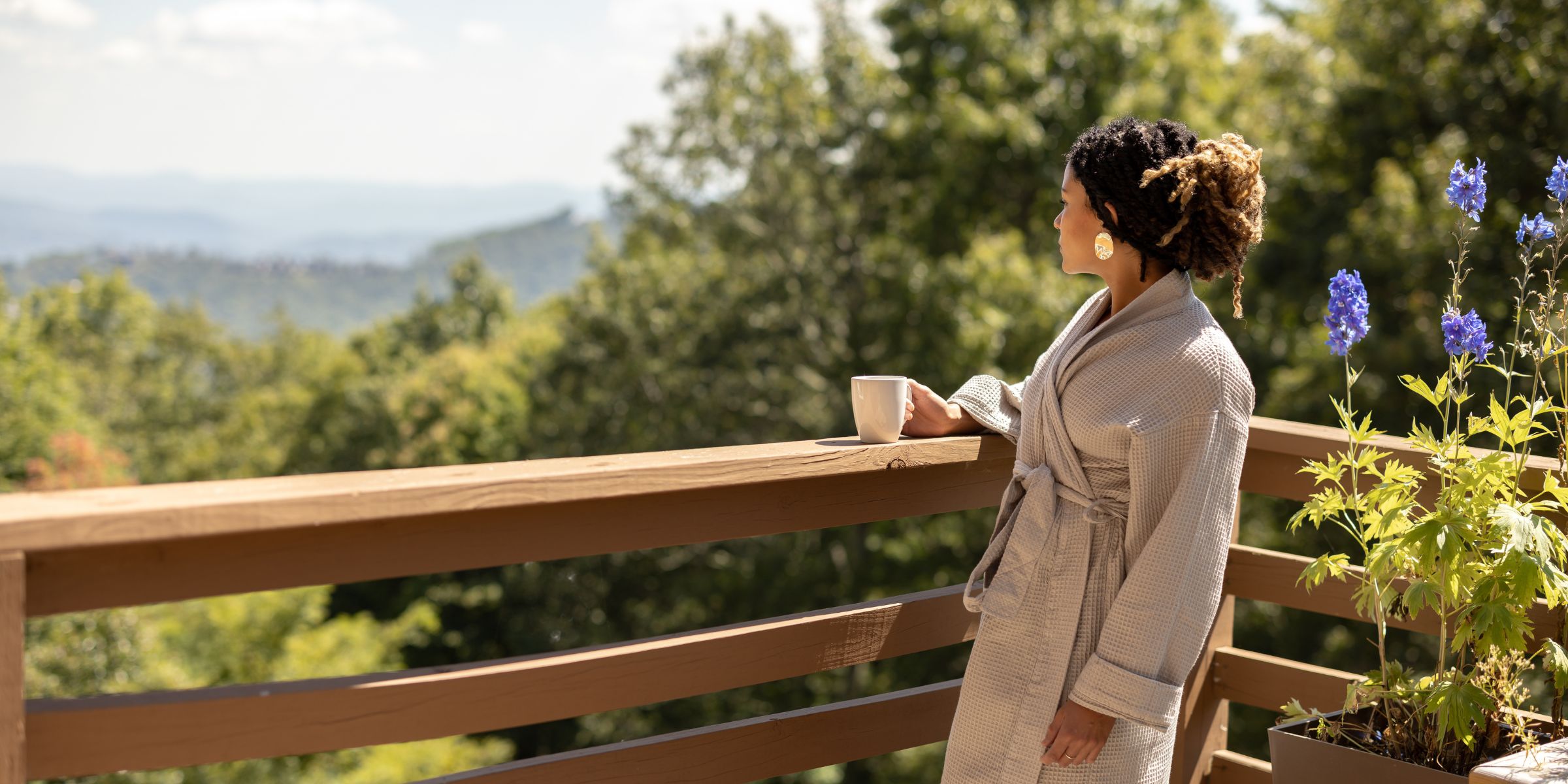
Until recently, the young would swear by FOMO (fear of missing out), but no sooner has that been replaced with JOMO—the joy of missing out, and the reason is simple—a generation saturated by consumerism and onslaught of information is looking to pause, and for once is ready to let go of the instant gratification.
A simple Google search on the average time spent by an American on the phone throws up a startling number. The average person spends 5.4 hours, which is a quarter of one’s waking hours, on the phone. Our phones buzz every few minutes, a stream of negative news updates doesn’t make life any easier, and our cities never sleep. According to a 2023 report by the World Health Organization, urban noise pollution has risen by 25 percent in the past decade, leading to spikes in anxiety, sleep disorders, and cognitive fatigue.
But the noise is not just literal. It is psychological. Political polarization has intensified globally. In the U.S. alone, a Pew Research study found that nearly 60% of adults feel exhausted by the constant political arguments. Economic instability, inflation fears, and job insecurity have added to the mental health burden we carry. Even at a personal level, many are carrying grief, burnout, and unprocessed anxiety quietly, under the surface, that feels overwhelming even when it’s physically quiet.
And so, people are looking to pause for a breath, for a few minutes of stillness to break away from the noise. The noise can be draining, depleting one’s energy, creativity, and sense of joy in life. And so, a growing wave of individuals, from overworked professionals to anxious teens, are checking out of chaos and checking into silence retreats. And this time it is not a luxury, but a necessity.
Across the globe, from the Himalayas to the Blue Ridge Mountains in Boone, from Sweden’s icy forests to Costa Rica’s tropical silence, retreat centers are reporting a noticeable surge. Silent Retreats or spending time in silence in the lap of nature, once believed to be the subject for monks and mystics to ponder upon, are now being booked out months in advance by professionals, students, parents, creators, and executives. All because the noise has become unbearable.
Then there’s the cost we pay for hyper-consumerism. The promise that the next product, the next trip, the next gadget, the next puff of cigarette will finally bring peace, a promise that rarely delivers. You may get paid well and you may even like your work, and yet there is this gnawing anxiety, sleeplessness, and burnout that is eating you up. As per this Deloitte study, 64% of US corporate professionals report feeling stressed or frustrated at their jobs, and 77% employees have experienced burnout. So you pay for it through your mental health, staggering pressure to outperform and overstimulation, while your spirit remains undernourished.
The Shift from Noise to Meaning
With those factors in mind, it’s no surprise that there’s a movement brewing to nudge people to opt out, even briefly, from the performance of life. They’re choosing to sit still, to unplug, and to be with themselves, not with their projections.
One of the most interesting trends is how people are no longer just attending silent retreats as a form of spiritual escape, but as a tool to take care of their minds. Not all of them are going out looking to find God, necessarily, but to find their own breath again. Art of Living Founder Gurudev Sri Sri Ravi Shankar talks about how opposing values in life, though seemingly opposite, are really complementary to each other. Because people have experienced enough disturbance and disquiet, they are now looking for some silence and peace in their lives. There is a longing to find a reference to stillness in a world that seems to be changing quickly and relentlessly every single day.
This longing for peace is not another passing fad. We know this because, according to the Global Wellness Institute, wellness tourism is a $639 billion industry; silence-based retreats are the fastest-growing subcategories among them. What used to be niche is now becoming mainstream!
Want to learn more? The Breathwork & Meditation Retreat guides you in proven breathing techniques and deep meditation practices that calm the mind, restore energy, and promote emotional balance.
When Corporations Start Sending Employees to Be Quiet
Corporate leaders are likewise now paying attention to this growing need for seclusion among their employees, not just for the well-being of their employees, but because it works out for them, too! An unexpected emerging trend is that companies, especially in the tech and financial sectors, are sponsoring silent retreats as part of their mental health initiatives. Some are discovering that the return on investment is measurable not just in the well-being of employees but it is also reflected in their ‘bottom line’ as well.
A recent study from the Harvard Business Review found that companies that introduced spiritual retreats reported a 21% drop in employee sick days and a 32% improvement in focus and productivity post-retreat. Some insurance providers in the US and Europe have started offering discounts to companies that include structured mental health retreats in their wellness programs.
These are not fringe experiments anymore. In Singapore, DBS Bank has tied up with wellness centers to offer subsidized meditation retreats to mid- and senior-level staff. In the U.S., Salesforce and Google have long incorporated meditation and stillness into their employee well-being initiatives.
The Pause People Didn’t Know They Needed
When people initially walk into a Silent Retreat, they come in with many ideas about what it would be like, or they have no idea of what to expect. The latter usually end up having better experiences because that openness takes us deeper into the silence. But a good Silence Retreat will help you address this initial restlessness, incessant thinking of discomfort, seamlessly. Usually, the discomfort comes from the burden of concepts of how things should be, mental impressions, repressed emotions, habits, and patterns that we tend to carry inside a retreat. But slowly, as they begin to fall away, by spending more time in silence, the mind settles down, and you start getting closer to your higher Self. What follows is often a kind of homecoming to a part of the self that has been buried under layers of noise, doing, and identity.
One of the greatest gifts of silence is that it doesn’t demand you to be who you are not. You don’t have to have an opinion, a plan, or a personality. You just have to be. Just sit still and follow the instructions gently. A gentleman in a recent retreat at the Center described his experience as this: “I came here to escape. But this wasn’t the program that’d made me run. Instead, it beckoned me to stop. And catch a breath! Because I had already been running (in my mind) and I didn’t know.”
Silence and Mental Health: Are the two related?
The short answer is yes. The relationship between silence and mental health is now being studied with more scientific depth. Neuroscientists have found that periods of silence can actually help grow new brain cells in the hippocampus, the region associated with learning, memory, and emotion regulation.
In fact, many therapists are now recommending silent retreats to clients suffering from burnout, anxiety, and chronic stress. Unlike talk therapy, which is about verbalizing thoughts, silence offers a different modality, one where healing happens not by speaking, but by being, by breathing, by becoming more and more present.
Silence may not solve problems, but it gives you the clarity you need to arrive at your answers. It de-clutters the mind, energizes your body, and gives you that inexplicable glow that Julia Roberts exudes in Eat Pray Love.